








Key Takeaways:
- Study Design Changes The Answer: Research testing a single oral dose of glutathione and research tracking daily use over several months have reached noticeably different conclusions.
- Digestion Is The Main Hurdle: Digestive enzymes can break glutathione into its individual amino acids before it reaches circulation, which makes standard oral forms an indirect route at best.
- Delivery Format Is Worth Paying Attention To: Liposomal glutathione was developed to help protect the molecule through digestion, and early research on this approach is encouraging.*
If you've ever read a glowing review of glutathione and then stumbled onto a forum post calling oral supplements a waste of money, you're not alone in feeling confused. Both reactions have some basis in the research, which is exactly why the question deserves a closer look than a simple yes or no.
At Sunny Within, we spent a lot of time with the scientific research before deciding how to approach glutathione ourselves, and the story it tells is more interesting than either extreme.
So, does oral glutathione work? This article walks through what studies have measured, why digestion plays such a big role, and what all of it means if you're considering supplementing.
Is Oral Glutathione Effective? It Depends On What You Measure
Whether oral glutathione is effective depends a lot on what you mean by "effective." Most studies measure glutathione levels in specific parts of the blood, including plasma, whole blood, and red blood cells, and each can respond differently. For instance, a supplement might barely move plasma levels in the hours after a dose while still raising red blood cell levels over several months of consistent use.
That's why it helps to understand the molecule itself before judging the research. So, what is glutathione? Basically, it’s your body's primary internal antioxidant, and your cells produce it on their own from three amino acids.

What The Research Has Found So Far
The research on oral glutathione has evolved quite a bit over the past few decades, and two studies in particular show how much the design of a study can shape its conclusion.
An early and frequently cited study gave healthy volunteers a single 3-gram dose of oral glutathione and then tracked their blood levels over the following several hours. Researchers found no significant increase in plasma glutathione and concluded that a single oral dose has negligible systemic availability (Witschi et al., 1992). That finding shaped skepticism about oral glutathione for years.
A much later randomized controlled trial took a different approach. Instead of a single dose, participants took oral glutathione every day for six months at either a lower or a higher dose. This time, researchers found meaningful increases in glutathione stores in the blood and other tissues compared to placebo, with the higher dose producing larger effects (Richie et al., 2015). Interestingly, those levels drifted back toward baseline after participants stopped taking the supplement. Taken together, these studies suggest that a single dose may not do much, while regular, everyday use over a longer period can make a measurable difference.
Does Glutathione Survive Digestion?
To figure out why results vary so much, it helps to ask whether glutathione survives digestion at all. Glutathione is a tripeptide, which means it's made of three amino acids connected by chemical bonds. Your digestive system is built to break exactly those kinds of bonds, since that's how it processes the protein in your food.
When standard oral glutathione reaches your stomach and small intestine, digestive enzymes can split it apart into glutamate, cysteine, and glycine before the intact molecule ever reaches your bloodstream.* Those individual amino acids are still absorbed and can be used by your cells to build new glutathione. The catch is that this rebuilding process is indirect, depends on whether your body has enough of the other building blocks on hand, and doesn't guarantee a dependable rise in glutathione levels.
Oral Glutathione Absorption: Why Dose And Duration Matter
The research on oral glutathione absorption points to two practical factors that matter almost as much as the supplement itself: how much you take and how long you take it.
The six-month trial mentioned above found that standard oral glutathione needed higher daily doses to produce larger increases, which is exactly the problem better delivery is designed to solve. Duration seems just as important, since benefits built gradually over months and faded once supplementation stopped. In other words, oral glutathione appears to work best as a steady daily habit rather than an occasional boost.
Oral vs. IV Glutathione: How The Two Compare
Comparing oral vs IV glutathione helps put the absorption challenge in perspective. When glutathione is delivered intravenously, it goes straight into the bloodstream and skips the digestive tract entirely, so there's no question of whether it made it past your digestive enzymes. That's why researchers often treat IV delivery as a reference point for studying what glutathione does once it's in circulation.
For everyday life, though, IV glutathione comes with tradeoffs. It requires clinic appointments, time in a chair for each session, and costs that can add up quickly with repeat visits. For most people interested in supporting their glutathione levels over the long term, oral supplementation is the more realistic option, which brings the conversation back to how well oral forms can be absorbed.

Glutathione Bioavailability And The Role Of Delivery Format
Glutathione bioavailability, meaning how much of what you take reaches circulation in a usable form, is where delivery format has become a major focus. Liposomal glutathione wraps the molecule inside a tiny sphere made of phospholipids, the same material your cell membranes are built from. That lipid layer is designed to shield glutathione from digestive enzymes and helps the intact molecule pass through the intestinal wall.*
Research on this approach is still developing, but early results are promising. In one small pilot study, adults who took liposomal glutathione daily for a month showed increases in glutathione levels across several blood measures, along with changes in immune markers like natural killer cell activity (Sinha et al., 2018). The study didn't include a standard-glutathione comparison group, so it can't say how much better liposomal performs, but it adds a useful data point to the conversation. For a deeper side-by-side look, our article on liposomal glutathione vs. glutathione goes over the distinctions in more detail, and our guide to liposomal vs. regular supplements shows how the same delivery logic applies to other nutrients.
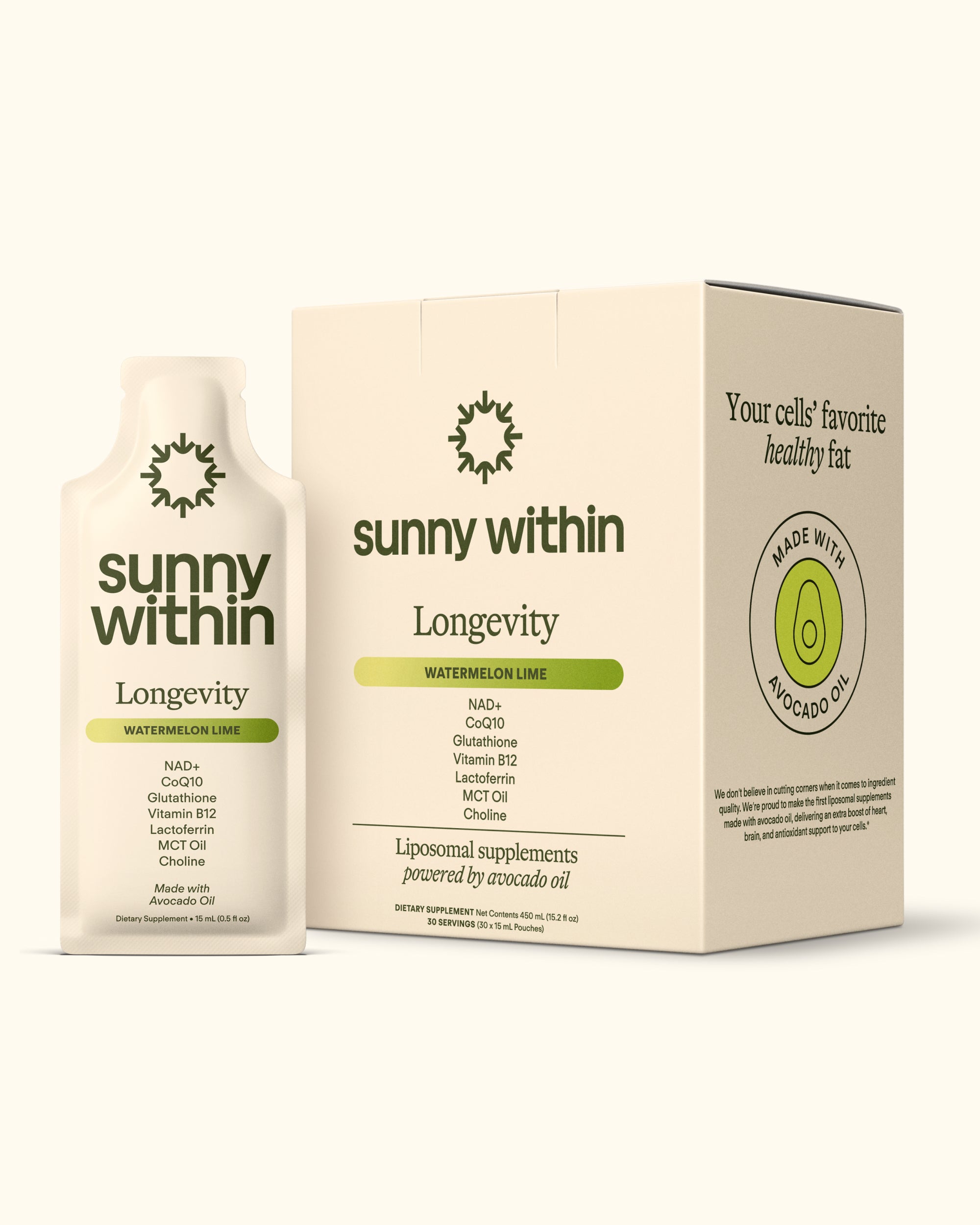
This research is a big part of why the glutathione in Sunny Within's Longevity takes a liposomal route. It's bound to vegan, dairy-free lactoferrin, a human-bioidentical smart protein abundant in colostrum, using patented technology that enables targeted absorption through special receptors in your gut lining, then wrapped in a liposome made with organic avocado oil. Think of lactoferrin as a VIP taxi escorting glutathione to your cells.*
Making Sense Of Your Options
If you're weighing whether oral glutathione is right for you, a few considerations can help you compare products more thoughtfully:
- Look Past The Milligrams: Standard glutathione needed big doses to move the needle in research, so how a product protects its glutathione matters as much as how much it contains.
- Plan For Consistency: Benefits in research built gradually over months and faded after stopping, so a supplement you can take every day matters more than a single high dose.
- Check The Delivery Method: A product that explains how it protects glutathione through digestion gives you more to go on than one that simply lists the ingredient.
- Talk To Your Provider: A healthcare provider can help you decide whether glutathione makes sense for your health history, especially if you're pregnant, nursing, or managing a condition.

Final Thoughts
So, does oral glutathione work? It can, but standard forms make it hard. A single dose barely moves blood levels, and the daily research that did show results relied on high doses taken for months. That's why delivery is the real story. Longevity's lactoferrin-liposomal system was built to get more glutathione through digestion and into your cells, in one easy daily squeeze.*
Frequently Asked Questions About Whether Oral Glutathione Works
Does oral glutathione work?
It can, depending on dose, duration, and delivery format. A single oral dose didn't raise plasma glutathione in early research, but daily supplementation over six months did increase body stores compared to placebo.
Why did older studies find oral glutathione ineffective?
One influential early study tested only a single dose and measured plasma levels over a few hours. Later research tracking daily use over several months found more encouraging results, which shows how much study design can shape conclusions.
Does glutathione survive digestion?
Not reliably in its intact form. Digestive enzymes can break glutathione into its three amino acids, which your body may use to build new glutathione, though that route is indirect.
How long does oral glutathione take to work?
In research, increases in glutathione stores built gradually over weeks to months of daily use. Levels also tended to return toward baseline after supplementation stopped, so consistency matters.
Is IV glutathione better than oral glutathione?
IV glutathione bypasses digestion entirely, which is a clear absorption advantage, but it requires clinic visits and recurring costs. Oral options, especially those designed to protect glutathione through digestion, are more practical for daily use.*
Is liposomal glutathione better absorbed than standard oral glutathione?
Liposomal glutathione is designed to protect the molecule through digestion, and early research shows promising increases in blood glutathione levels.* That's why Longevity pairs liposomal delivery with lactoferrin, for targeted absorption through receptors in your gut lining.*
|
*This statement has not been evaluated by the Food and Drug Administration. This product is not intended to diagnose, treat, cure, or prevent any disease. |
Sources:
- Witschi, A., Reddy, S., Stofer, B., & Lauterburg, B. H. (1992). The systemic availability of oral glutathione. European Journal of Clinical Pharmacology, 43(6), 667–669.
- Richie, J. P., Jr., Nichenametla, S., Neidig, W., Calcagnotto, A., Haley, J. S., Schell, T. D., & Muscat, J. E. (2015). Randomized controlled trial of oral glutathione supplementation on body stores of glutathione. European Journal of Nutrition, 54(2), 251–263.
- Sinha, R., Sinha, I., Calcagnotto, A., Trushin, N., Haley, J. S., Schell, T. D., & Richie, J. P., Jr. (2018). Oral supplementation with liposomal glutathione elevates body stores of glutathione and markers of immune function. European Journal of Clinical Nutrition, 72(1), 105–111.