








Key Takeaways:
- The Supplement Facts Panel Follows A Standard Format: Every regulated supplement in the U.S. uses the same basic structure, so learning it once helps you compare any product.
- The Ingredient Form Matters As Much As The Dose: Two products with the same milligram count can behave very differently depending on which form of a nutrient they use.
- Quality Claims Are Only As Good As The Proof Behind Them: Phrases like "tested" and "certified" mean more when a brand backs them with documents you can check.
Supplement labels are designed to meet regulatory requirements first and to be easy to read second. The result is a box of numbers, symbols, and fine print that most people skim without learning much.
At Sunny Within, we think carefully about every element on our labels, including what it says, why it's there, and what it communicates about the formula.
This guide walks through each part, so you’ll learn how to read supplement labels like a pro.
Dietary Supplement Label Guide: What Every Label Includes
Before diving into the details, it helps to know what a supplement label is required to show. In the U.S., the FDA requires several key elements on dietary supplement labels, including the product's name, the net quantity of contents, a Supplement Facts panel, a list of other ingredients, and the name and location of the manufacturer or distributor (U.S. Food and Drug Administration, n.d.).
You'll also see a familiar disclaimer whenever a product claims to support the body's structure or function, such as "supports immune health." That disclaimer explains that the FDA hasn't evaluated the statement and that the product isn't intended to diagnose, treat, cure, or prevent any disease. It's a standard requirement rather than a red flag, and our article on The FDA's Role in the Supplement Industry: What You Need to Know explains why supplements are regulated this way.

Supplement Facts Label Guide: Reading The Panel
The Supplement Facts panel is the rectangular box that holds most of the important information. Here's how to read it from top to bottom:
- Serving Size: This tells you how much makes up one serving, such as one capsule or one pouch, and every amount listed below it is based on that serving.
- Servings Per Container: This number helps you figure out how long a product will last and compare cost between brands.
- Amount Per Serving: Each active ingredient is listed with how much you get in a single serving, usually in milligrams (mg) or micrograms (mcg).
- % Daily Value: This compares each amount to the reference intake set for most adults, so you can see how much of your daily need one serving covers.
- The Dagger Symbol (†): When an ingredient has no established Daily Value, a dagger points to a footnote that says so, which is simply an acknowledgment that no reference amount exists.
It's also worth paying attention to proprietary blends. When a label groups several ingredients under one combined weight, the brand doesn't have to share how much of each ingredient is included. That's legal and common, but it makes it harder to tell whether a featured ingredient is present in a meaningful amount.
How To Read Vitamin Labels: Why The Form Matters
Learning how to read vitamin labels means looking at the ingredient name, not just the number next to it. Many nutrients come in several forms, and those forms can behave differently in the body (National Institutes of Health Office of Dietary Supplements, n.d.).
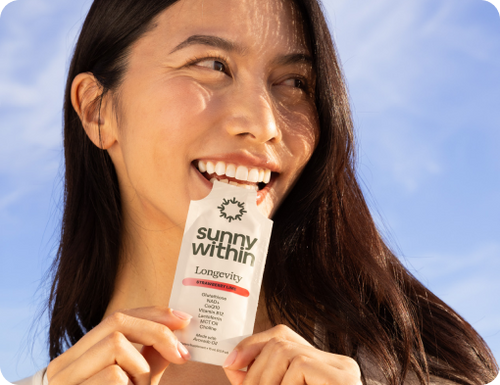
Vitamin B12 is a good example. One product might list cyanocobalamin, which your body has to convert, while another lists methylcobalamin, a form your body can use more directly.* That’s why every Sunny Within formula with B12, including Longevity and NAD+, uses methylcobalamin.* Overall, both may show the same dose, but the distinction appears in the ingredient name.
Minerals work the same way. Magnesium oxide is inexpensive and common, but it tends to absorb less efficiently than gentler forms like magnesium glycinate.* Reading the form alongside the dose gives you a much fuller picture of what you're getting.

Supplement Label Ingredients: The Other Ingredients Section
Below the Supplement Facts panel, you'll usually find a section labeled "Other Ingredients." This lists everything in the product that isn't an active ingredient, such as capsule materials, flow agents, coatings, flavorings, and delivery systems. It's easy to skip, but these ingredients reveal a lot about how a product is made.
Some common items are widely considered fine, like plant-based capsule materials. Others, like synthetic dyes or hydrogenated oils, are things some people prefer to avoid. This section can also tell you about a product's delivery system. For example, in Sunny Within formulas, good fats like avocado oil and coconut-derived MCT oil appear here because they form the base of our liposomes, which is a functional part of how the product works. Don't forget to look for allergen information, too. Labels typically note common allergens like tree nuts, dairy, or soy, either in the ingredient list or in a separate "contains" statement.
Understanding Supplement Labels Beyond The Panel
Reading supplement labels thoroughly also means knowing what quality claims really mean. These terms often appear together, but they don't describe the same thing:
- GMP Certified: This means the manufacturing facility follows Good Manufacturing Practices, which cover how products are made, handled, and documented.
- Third-Party Tested: This means an independent lab has tested the finished product to confirm that what's inside matches the label and is free from contaminants.
- Certificate Of Analysis (COA): This is the document that shows a lab's actual test results, and it's what turns a "tested" claim into something you can verify yourself.
At Sunny Within, every batch is tested by an independent lab for purity, potency, and safety, and you can look up the certificate for your specific batch number on our Third-Party Test Results page. If you have questions about a specific product's ingredients, our FAQ is a helpful place to start. As always, check with your healthcare provider before adding a new supplement, especially if you take medications or manage a health condition.

Final Thoughts
Supplement labels make a lot more sense once you know where to look. The Supplement Facts panel tells you what's in each serving, the ingredient names reveal which forms you're getting, and the Other Ingredients section shows how the product is put together. Pair that knowledge with verifiable testing documents, and you'll be able to compare products with much more peace of mind.
Frequently Asked Questions About How To Read Supplement Labels
What does the dagger symbol (†) mean on a supplement label?
It means that ingredient doesn't have an established Daily Value. It's basically an acknowledgment that no official reference amount exists, not a warning.
What is a proprietary blend on a supplement label?
A proprietary blend groups several ingredients under one combined weight without listing each individual amount. It's legal, but it makes it harder to evaluate how much of each ingredient you're getting.
Why does the form of a nutrient matter on a supplement label?
Various forms of the same nutrient can be absorbed and used differently. For example, magnesium glycinate and magnesium oxide deliver the same mineral, but glycinate is gentler on digestion and tends to absorb more efficiently.*
What's the difference between GMP certification and third-party testing?
GMP certification covers how a facility manufactures products, while third-party testing checks the finished product itself. Both are valuable, and they answer different questions.
How can I check whether a supplement has been third-party tested?
Look for a brand that shares certificates of analysis from an independent lab. Some brands, including Sunny Within, let you look up results by batch number.
What does % Daily Value mean on a supplement label?
It shows how much of a nutrient one serving provides compared to the reference intake for most adults. It's a quick way to see how a serving fits into your overall daily intake.
|
*This statement has not been evaluated by the Food and Drug Administration. This product is not intended to diagnose, treat, cure, or prevent any disease. |
Sources:
- National Institutes of Health Office of Dietary Supplements. (n.d.). Dietary supplements: What you need to know. U.S. Department of Health and Human Services.
- U.S. Food and Drug Administration. (n.d.). Dietary supplement labeling guide. U.S. Department of Health and Human Services.

